

What does composting mean?
Composting is the controlled breakdown of organic materials—such as food scraps, leaves, and grass trimmings—into a nutrient-rich material that can improve soil. In household waste management, composting also means sorting organic materials correctly so they can be collected and processed instead of sent to a landfill.
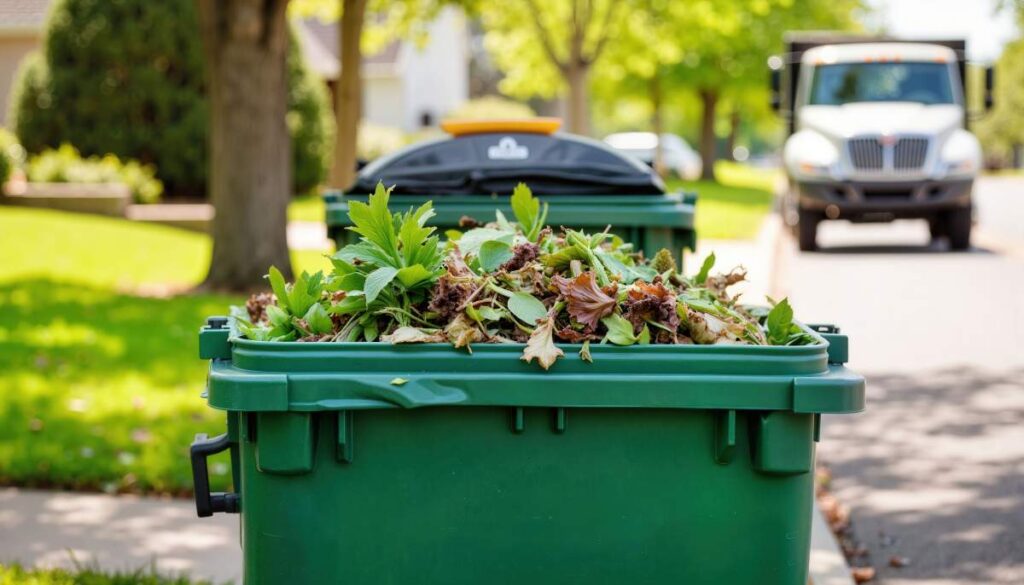
For residents of Brisbane, CA, the green compost bin is the primary way to participate in community organics collection. Grass trimmings and food scraps must go in the green bin, never the trash.
What belongs in the green compost bin?
The green bin is intended for organic materials that can be processed into compost and related products. Common examples include:
- Fruit and vegetable scraps
- Meat, bones, and seafood scraps
- Coffee grounds and paper coffee filters
- Tea leaves and tea bags without plastic components
- Eggshells
- Grass trimmings, leaves, and small plant trimmings
- Food-soiled paper, such as napkins, paper towels, and plain paper plates
- Wax-coated paper, including parchment paper and wax paper
- Uncoated paper used to wrap food
A useful rule is that food scraps and yard trimmings belong in the green bin even if they are wet, wilted, or no longer usable. Food-soiled paper should also go with organics rather than with clean paper recycling.
The green bin is not a general-purpose container for anything labeled “compostable.” Items that look or feel like plastic—including plastic bags, bio-plastic liners, and products marketed as compostable plastic—do not belong in the green bin. These materials should go in the grey garbage bin.
How should kitchen scraps be collected?
A small kitchen pail makes daily sorting easier. Keep it near food preparation areas and empty it into the green bin regularly, especially during warmer weather.
The pail may be lined with paper only. Newspaper, a paper bag, or another suitable paper liner can help absorb moisture. Plastic liners—including bio-plastic and “compostable” plastic liners—should not be used. Compostable or bio liners belong in the grey garbage bin, not the green bin.
To reduce odors:
- Drain excess liquid before placing scraps in the pail.
- Add a layer of food-soiled paper to absorb moisture.
- Empty the pail frequently.
- Rinse the pail with water as needed.
- Store the green bin in a shaded location when practical.
In homes with limited indoor storage or shared outdoor areas, smaller and more frequent transfers to the green bin can be more comfortable than allowing scraps to accumulate.
What is the difference between composting at home and using the green bin?
Home composting and green-bin collection are related but not identical.
A backyard compost pile or tumbler is designed for residents to manage organic materials at home. It usually works best with a balanced mixture of “greens,” such as fresh food scraps and grass, and “browns,” such as dry leaves, untreated paper, and small branches.
The green-bin system is a collection program. Organic materials are taken to a facility designed to process a broader range of food scraps and yard trimmings under controlled conditions. This makes the green bin more practical for materials that are difficult to manage in a small household compost pile, including meat scraps, bones, and larger volumes of yard waste.
Households can choose either approach where appropriate, but materials placed in the green bin must still follow local sorting rules.
How can someone start composting at home?
Start with a manageable setup rather than trying to compost every organic material immediately.
Choose a shaded, level location with reasonable drainage. A covered bin or tumbler can help limit excess moisture and discourage animals. Add a mixture of food scraps and dry carbon-rich materials such as dry leaves, plain shredded paper, or small amounts of untreated plant material.
A healthy pile should be damp like a wrung-out sponge, not saturated. If it smells sour or becomes slimy, add more dry material and mix it gently. If it remains dry and inactive, add a small amount of water and turn the material.
Cutting food scraps into smaller pieces can speed decomposition. Avoid adding large quantities of one material at a time, since a thick layer of grass or wet food scraps can compact and restrict airflow.
Home composting requires attention to moisture, airflow, and the materials being added. The green bin may be simpler for residents who do not have suitable outdoor space, live in a multifamily building, or prefer not to manage a compost pile.
What should renters and multifamily households know?

Composting can work in apartments and shared housing through a kitchen pail and green-bin service. Residents should confirm that the property has access to an organics container and that food scraps are placed inside rather than left beside the bin.
In multifamily properties, clear signs near shared containers can reduce confusion. Keeping food scraps separate from recycling is especially helpful because wet organic material can contaminate paper and cardboard.
California’s organics requirements apply broadly to residences and businesses, although specific collection arrangements can vary by property type. Property owners or managers are generally responsible for arranging required service at multifamily properties. Residents who do not see an available green bin should raise the issue with property management.
How does recycling fit with composting?
Composting and recycling solve different waste problems. Food scraps and food-soiled paper belong in the green bin, while clean and dry recyclable materials belong in the recycling bin.
Recycling bins are split:
- One side is for bottles and cans.
- The other side is for paper and cardboard.
Glass bottles and jars belong in recycling. Containers such as bottles, jars, and tubs do not need to be flattened before recycling. Cartons are not accepted in recycling, so they should not be placed on either side of the recycling bin.
Keeping organic materials out of recycling is just as important as keeping recyclable materials out of the green bin. A greasy paper container may belong with organics, while a clean, dry paper box belongs with paper and cardboard recycling.
What common composting mistakes should be avoided?
Several errors occur because packaging labels and everyday habits can be misleading:
- Putting food scraps in the grey trash bin
- Treating plastic-looking “compostable” items as green-bin material
- Using plastic liners in a kitchen pail
- Placing clean paper in the green bin instead of recycling
- Allowing liquid to collect in the kitchen pail
- Filling the green bin with yard trimmings while leaving food scraps in the trash
- Assuming every paper product is recyclable, even when it is heavily soiled
The simplest routine is to separate materials at the moment they are discarded. Food scraps, grass trimmings, and food-soiled paper go into the green bin; clean paper and cardboard go into the paper-and-cardboard side of recycling; bottles, cans, and glass bottles and jars go into the containers side.
Why does correct sorting matter?
Correct sorting helps organic materials reach the processing system intended for them. It also keeps plastic and other contaminants out of composting operations and prevents food residue from damaging the quality of recyclable paper.
For local households, consistent habits matter more than complicated equipment. A labeled kitchen pail, a shaded green bin, and a clear understanding of the three-bin system are usually enough to make organics sorting part of a normal kitchen and yard routine.