

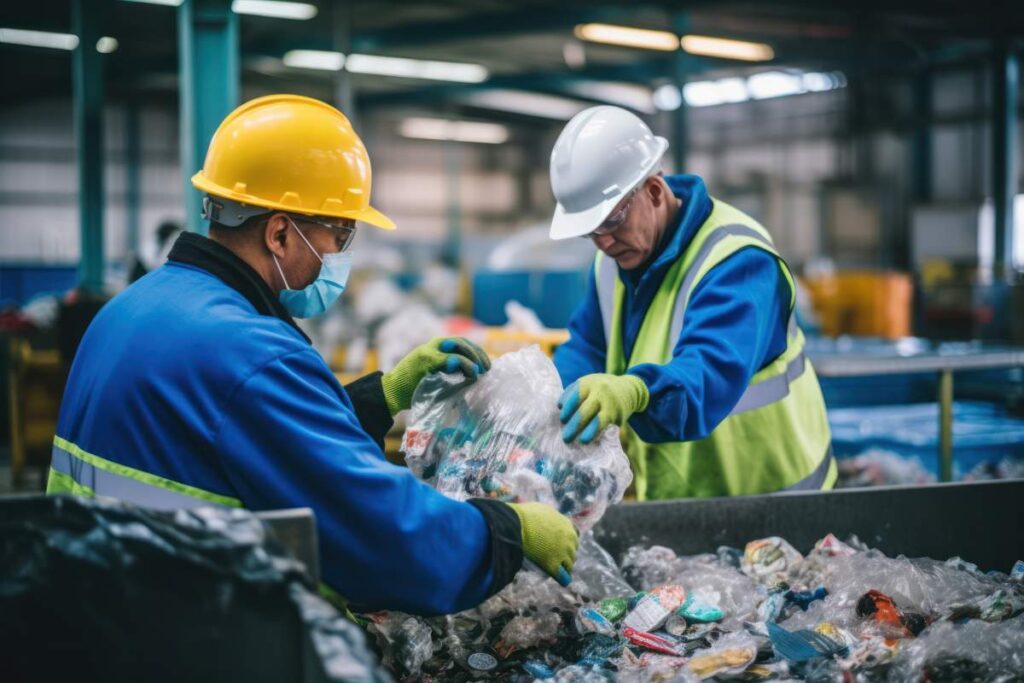
What happens after the recycling truck collects the bin?
After collection in Brisbane, CA, recyclable materials are transported to a sorting and processing facility. They are separated by material type, prepared for shipment, and sent to manufacturers that can use recovered paper, metal, plastic containers, or glass bottles and jars to make new products.
Recycling is not a single step. It is a chain of activities that begins with correct sorting at home. Materials placed in the wrong bin, covered in food, or tied inside plastic bags can slow the process, contaminate usable material, or be removed as residue.
How should recycling be separated at home?
Residential recycling bins are split into two sections:
- One side is for bottles and cans.
- The other side is for paper and cardboard.
Keeping these materials in their assigned sections helps the collection system and sorting facility handle them more efficiently. Recyclables should be placed loose in the bin rather than inside a plastic bag.
Containers such as bottles, jars, and tubs do not need to be flattened. Emptying them is helpful, but they do not have to be perfectly washed. A quick rinse can reduce leftover food or liquid that might soil paper and cardboard.
The recycling side for containers includes items such as:
- Plastic bottles, jars, and tubs
- Aluminum and steel cans
- Glass bottles and jars
The paper and cardboard side is intended for clean, dry materials such as office paper, newspapers, mail, magazines, and flattened cardboard boxes. Cartons are not accepted in recycling.
What happens at the sorting facility?
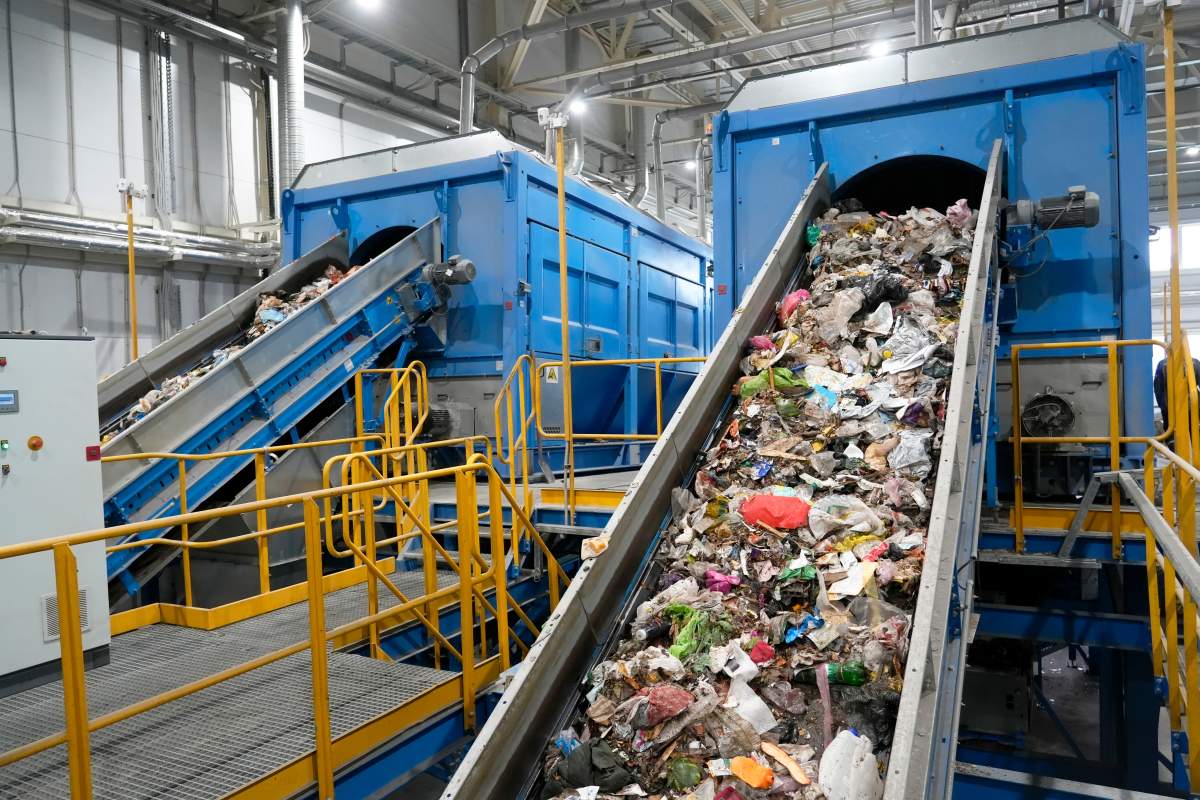
At the facility, the mixed recyclables move through a series of sorting stages. Workers and equipment separate paper, cardboard, metal, plastic containers, and glass bottles and jars into different material streams.
The process generally includes:
1. Initial inspection: Large or obviously unsuitable items may be removed.
2. Material separation: Paper, cardboard, containers, and other materials are divided into groups.
3. Quality control: Workers inspect the streams and remove items that do not belong.
4. Compacting and baling: Similar materials are compressed into dense bundles.
5. Shipment: The bales are sold or transferred to processors and manufacturers.
The exact equipment and sequence can vary, but the goal is the same: produce clean, consistent material that manufacturers can use.
Recycling facilities are not designed to identify every item perfectly. A container that looks recyclable may still be removed if it is heavily contaminated, mixed with unsuitable materials, or too small to recover efficiently.
Does everything placed in the recycling bin get recycled?
No. Some material is removed during sorting and becomes residual waste. This does not mean recycling is pointless; it means the system depends on reasonably clean and correctly sorted material.
Common problems include:
- Food or liquid left inside containers
- Plastic bags used to hold recyclables
- Paper or cardboard soaked with food or liquid
- Items placed in the wrong section of a split bin
- Materials that are too small, tangled, or difficult to separate
- Household items that do not belong in curbside recycling
A recycling symbol on packaging does not guarantee that the item belongs in a local recycling bin. Local programs are based on the materials that can be collected, sorted, and sold through the available system.
What happens to paper and cardboard?
Paper and cardboard are separated from containers and prepared for paper mills or other processors. The material is mixed with water, broken down into fiber, cleaned, and formed into new paper products or packaging.
Clean, dry paper and cardboard have a better chance of being recovered than wet or food-soiled material. Flattening cardboard helps it fit into the paper and cardboard section and prevents it from taking up unnecessary space.
In homes with limited storage, especially smaller residences or buildings with shared collection areas, breaking down boxes can also help keep the recycling section from overflowing.
What happens to bottles, cans, tubs, and jars?
Plastic containers are sorted by resin type and color when possible. They may be washed, ground into flakes or pellets, and used to manufacture new containers, durable plastic products, or other goods.
Aluminum and steel cans are separated using specialized equipment. Aluminum can be melted and formed into new metal products. Steel is processed into new steel feedstock.
Glass bottles and jars are separated from other materials and processed into glass-making material. Because glass can break during collection and handling, keeping the recycling bin free of unrelated objects helps protect the quality of the glass stream.
What should happen to food scraps and grass trimmings?
Grass trimmings and food scraps belong in the compost, or green, bin — never the trash. Organic material is collected separately because it can be processed into compost or other soil-supporting material instead of being buried in a landfill.
Kitchen pails may be lined with paper only. Plastic liners, including bio-plastic and “compostable” plastic liners, belong in the trash, or grey, bin. They do not belong in the compost bin.
Keeping organic waste separate is especially useful in a community where many homes have compact kitchens, shared collection areas, or limited indoor storage. A paper-lined pail can make transferring scraps to the green bin easier without introducing plastic contamination.
What happens if e-waste ends up in recycling?
Electronic waste found in recycling is separated for proper handling. Electronics contain materials that require different processing from ordinary bottles, cans, paper, and cardboard.
Items such as old electronics, batteries, and other special wastes should not be placed in curbside recycling unless local instructions specifically allow them. Batteries can also create fire risks in collection vehicles and sorting facilities.
Separate collection programs are used for these materials so they can be handled, dismantled, recycled, or disposed of under the appropriate requirements.
Why does correct sorting matter?
Correct sorting improves the quality of the material that reaches processors. It also reduces hazards for drivers, workers, and equipment.
A useful routine is simple:
- Put bottles, cans, tubs, and glass bottles and jars in the container section.
- Put paper and cardboard in the paper section.
- Keep recyclables loose, not bagged.
- Empty containers before placing them in the bin.
- Put food scraps and grass trimmings in the green bin.
- Keep e-waste and other special items out of curbside recycling.
The collection truck is only the beginning. What happens after pickup depends heavily on the condition and placement of the material placed at the curb.